상단 섹션
 EnglishEnglish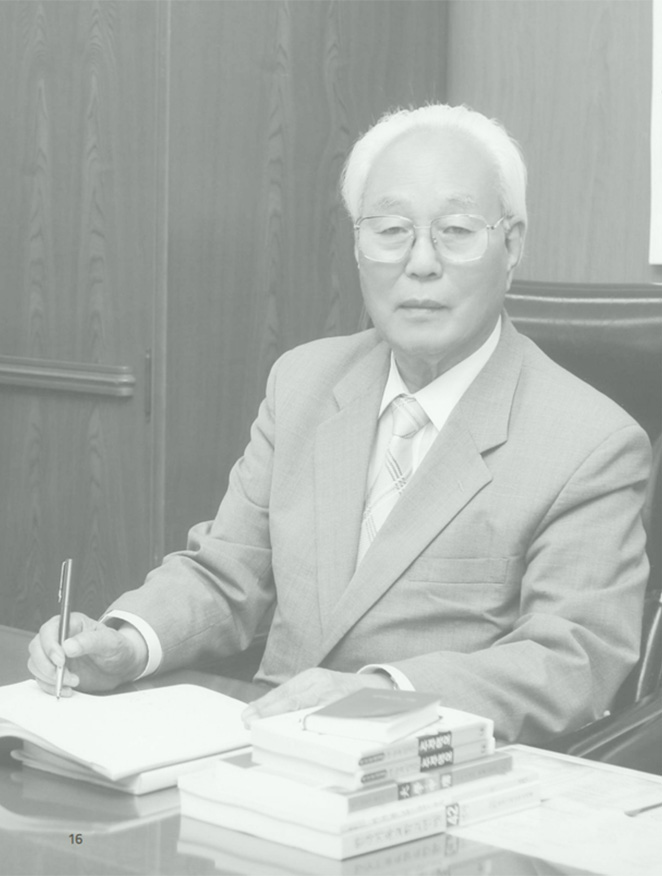
청산은 해가 갈수록 점점 더 푸르르며
한강물 흐를수록 더욱 더 맑아지니
맡은 일 충성하도록 부지런히 힘써야지.
많은 욕심 내지 말고 큰 희망 간직하고
힘쓰면서 노력하여 최후까지 실천하며
내할일 끝까지 잘 하도록 참으면서 힘써야지.
뜰안에 대추나무 단감이 열리는 꿈
이순을 넘고 보니 분수에 맞는 일을
천천히 더 너그럽게 한가하게 살으리라.
훈장을 시작한지 한평생 짧은 세월
어느 것 잘못이며 무엇에 성의 있나
하나님 보시기에는 별 것들도 아니겠지.
With the educational belief that "there is no royal road in academics" and his endless passion for education,
Wang Pyo-sun established the Songgok Educational Foundation, an institution comprising middle school,
high school, and university.
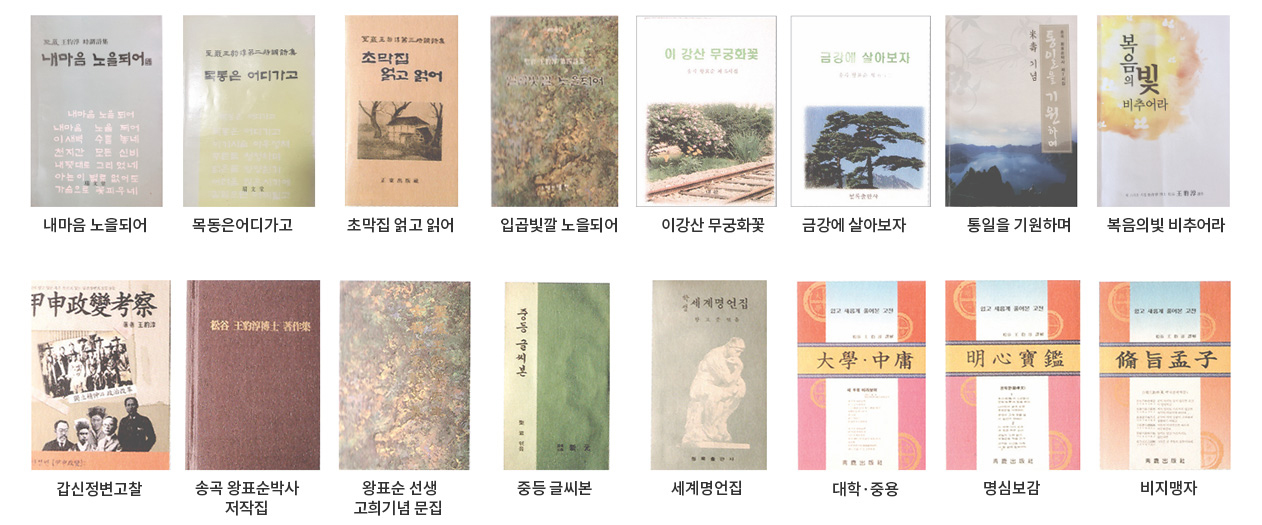
Starting with his debut as a modern Korean sijo poet, he actively developed over 4,000 works and published
his 16th collection of works. In addition, he pursued continuous research in Chinese literature, history,
and calligraphy, marking his path as an apostle of inquiry.
Wang Pyo-sun began his life's goal with education, fulfilling the nation's educational mission and
creating the value of lifelong learning while keeping in tune with Korea's educational history.
Founder Wang Pyo-sun is a model apostle and serves as an inspiration to his juniors,
with his educational journey continuing to shine brightly.

- Born in Yangju, Gyeonggi-do in 1922
- Graduated from Dongguk University Graduate School
- Graduated from Korea University Graduate School of Business
- Obtained an honorary doctorate in education from Kwandong University
- Established Songgok Educational Foundation
- Principal of Seongdong Commercial School
- Modern Sijo Cheonryo Debut
- Served as president of the Modern Sijo Literary Association
- Conducted educational inspections in the U.S., South America, Southeast Asia, Europe, etc.
- Participated in the 6th Pacific Educators Conference
- First Chairman of the Department of Political Science at Dongguk University
- Served as audit and 11th president of Korea University Alumni Association
- Member of Korea Sijo Poets Association
- 1987: President of Seoul Private School Principals Association
- January 31, 1970: Established Songgok Girls’ Middle School
- November 29, 1972: Established Songgok Girls’ High School
- December 30, 1986: Established Songgok High School
- September 2, 1997: Established Songgok Girls’ Information Industrial High School
- March 1, 2003: Established Songgok University
- May 20, 1990: Received the Education Family Award from the Minister of Education
- May 16, 1997: Awarded the 16th Korean Educator Award
- 1987: President of Seoul Private High School Principals Association
- December 12, 2005: Received the Minister of Education Award
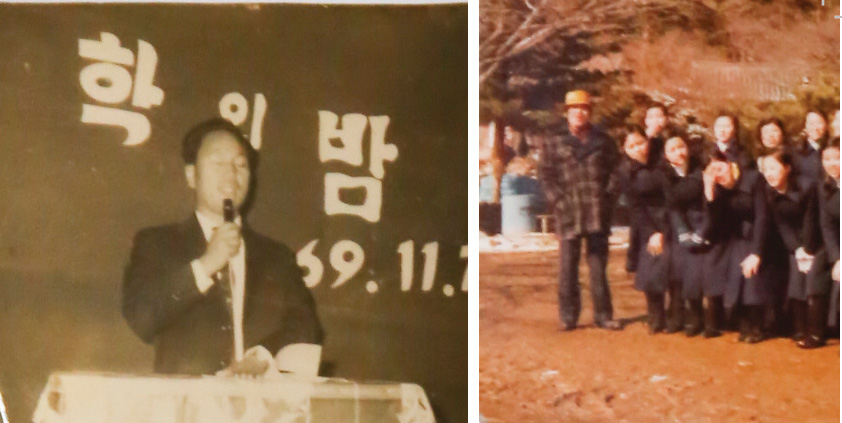
He learned Chinese classics from his father at a young age, and after completing the 5th grade of elementary school at a teaching center, he entered the 6th grade of Janghyeon Elementary School in Jinjeop-myeon, Namyangju-si and graduated. After that, he moved to Seoul alone and embarked on the path of full-time learning. At that time, liberation occurred at the end of Japanese colonial rule, but it was a socially chaotic period of division, so the path to education was not easy. Thus, he attempted to enter university through the qualification exam. As the life of a lifelong student became more difficult, his desire for education grew, and social awareness of education also took root in his mind. After some difficulties, he finally entered the Department of Literature at Dongguk University in 1946, graduated in 1949, and then transferred back to the third year of the Department of Political Science. However, his studies were temporarily suspended due to the June 25 Incident in 1950.
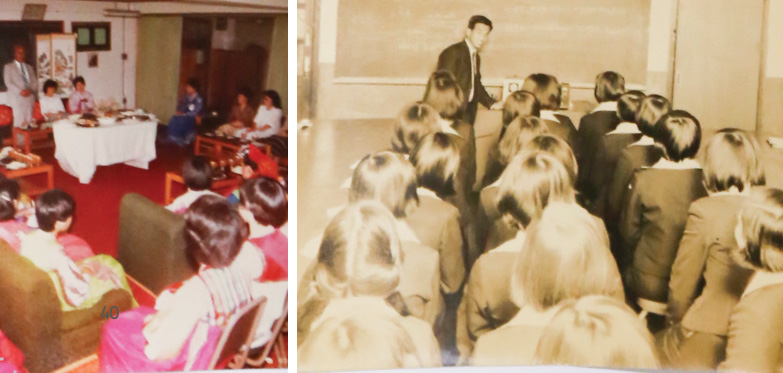
He began his education career as a teacher at Seongdong Middle and High School in April 1953, with a secondary teacher certificate obtained upon graduating from Dongguk University's Department of Professional Studies. This later became the starting point for realizing his dream of establishing a school.
7 years at Seongdong Middle and High School starting in 1953
5 years at Seonlin Middle School starting in 1960
He worked as a teacher for 12 years, teaching Korean and Chinese characters.
He resumed his interrupted studies and graduated from the Department of Political Science at Dongguk University in 1955. Although he started his studies late and began teaching at the age of 32, his 'passion for establishing a school' only grew.
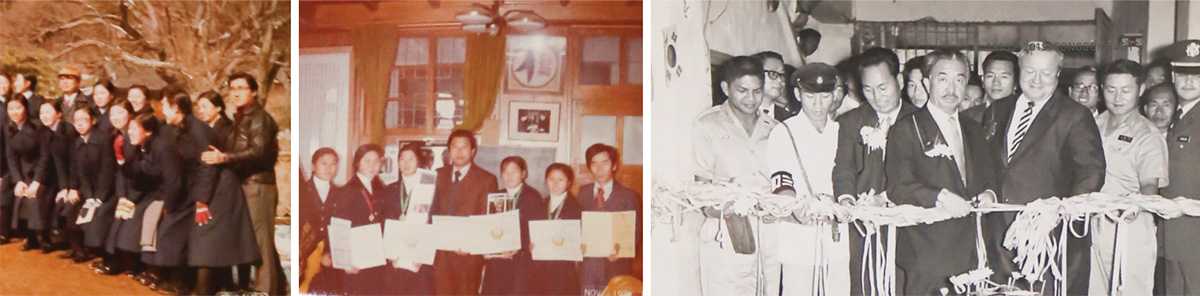
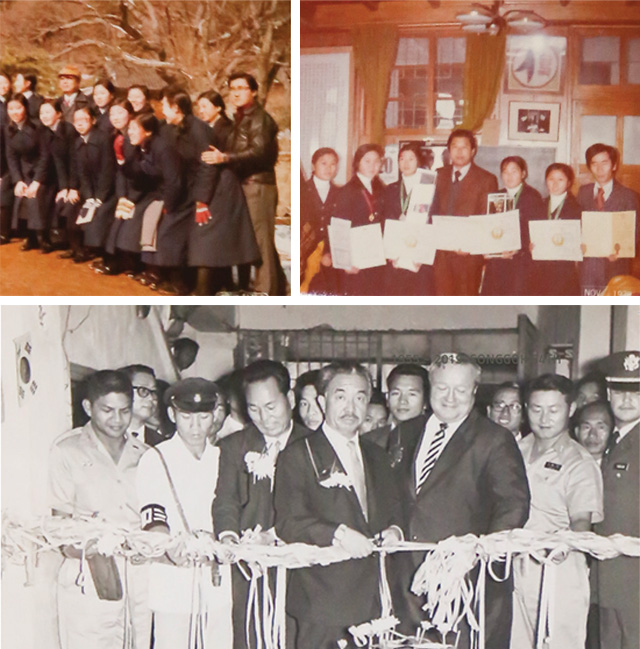
After the armistice in 1953, education was neglected as social chaos and priority was given to resolving food, clothing, and shelter.
At this time, the founder took over a closed civic high school with the belief that
education was the top priority and opened it, but there were only about 7 students for 6 months.
Afterwards, full-scale education business was launched, starting with the acquisition of Wangsin High School in Wangsimni.
Acquisition of Wangshin High School in 1955
Acquisition of Seoul Accountancy High School of Technology in 1964
Established Seongdong Commercial Training School in 1966
In particular, Seongdong Commercial High School had so many students that it had to conduct an entrance exam, and the number of students reached 3,600. What is clear is that ‘a young common teacher took on the mission’ of the government and society’s educational responsibility, which had been postponed due to the recovery project after the incident. It can be said to be very meaningful in that it provided an educational opportunity and opportunity for thousands of wandering youth to follow the right path. On the other hand, the financial pain caused by the expansion of schools and facilities was covered with his own assets, and in return, his family shared the hardships by living in a rented room or sleeping room, and the founder's unique patience and tenacity led to the completion of Songgok as it is today.
In 1969, the Third Republic implemented a fateful education reform. To free elementary school students from testing, they promoted exam-free admission to middle school and standardization efforts. Since all elementary school graduates were assigned to middle schools, there was inevitably a shortage of middle schools and high schools. Even with new schools being built and 70 students assigned to each class, the shortage continued.
The founder worked tirelessly to expand the school to solve the nation’s educational challenges even under unfavorable conditions. As a result, he opened the path to learning for many students.
Songgok Girls’ Middle School opened in 1970
Songgok Girls’ High School established in 1973
Songgok Girls’ High School Division 2 established in 1980
However, the founder faced significant challenges as he neither had financial resources nor guardians to support the school. Additionally, the school site was a military protection area, making the situation even more difficult. The hardships of overcoming these issues are difficult to describe. The only solution was his educational philosophy and patience.
When Seongdong Commercial School was closed due to the high school standardization policy in 1986, there were widespread calls for the school to be closed due to the need for government subsidies. However, the founder reorganized the regular high school due to his dedication to education.
Songgok High School opened in 1987
While others calculated profits and losses, the founder pursued the establishment of a school solely with the will to help national development through education. For the founder, love of education and love of country were connected by one path.
The founder had another dream: to establish a university at Songgok Educational Foundation. Despite his struggles with education, he took on the challenge of establishing a junior college to train professional technicians who could dedicate themselves to their craft, firmly believing that securing excellent talent was the way to survive as a country.
Obtaining permission from the Ministry of Education was not easy. After persistent efforts, the dream of establishing a university became a reality.
Established Chuncheon Information University in 2003
In 2005, the school name was changed to Songgok University
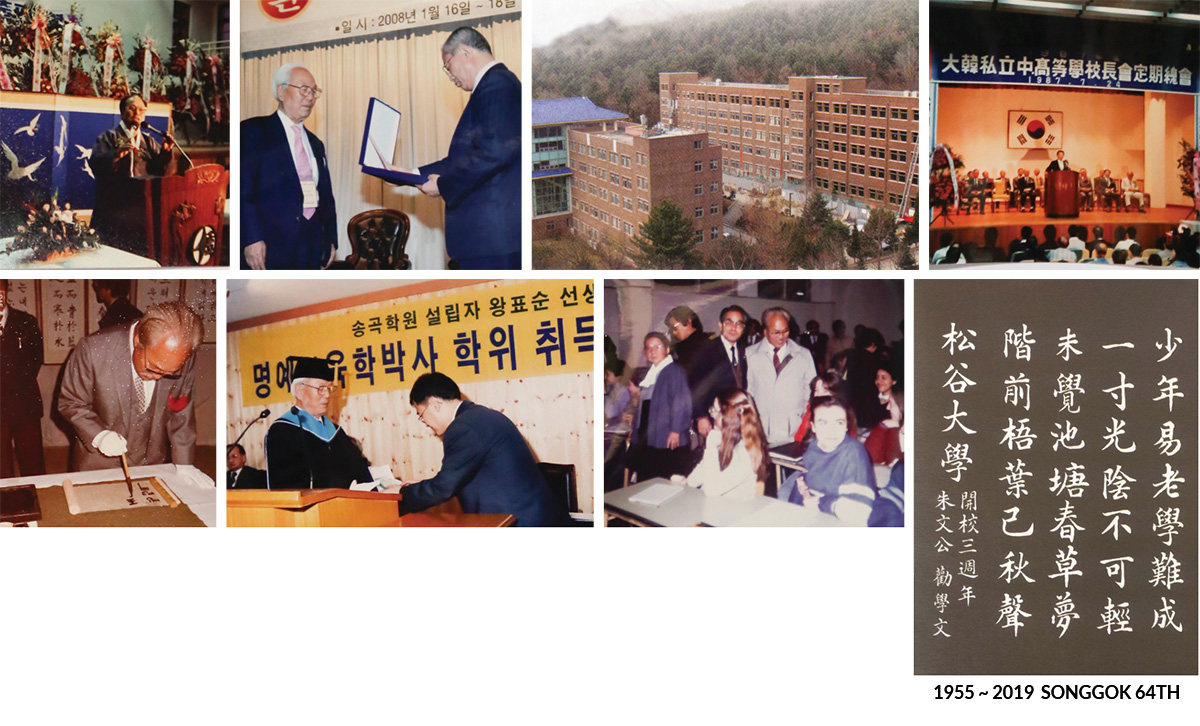
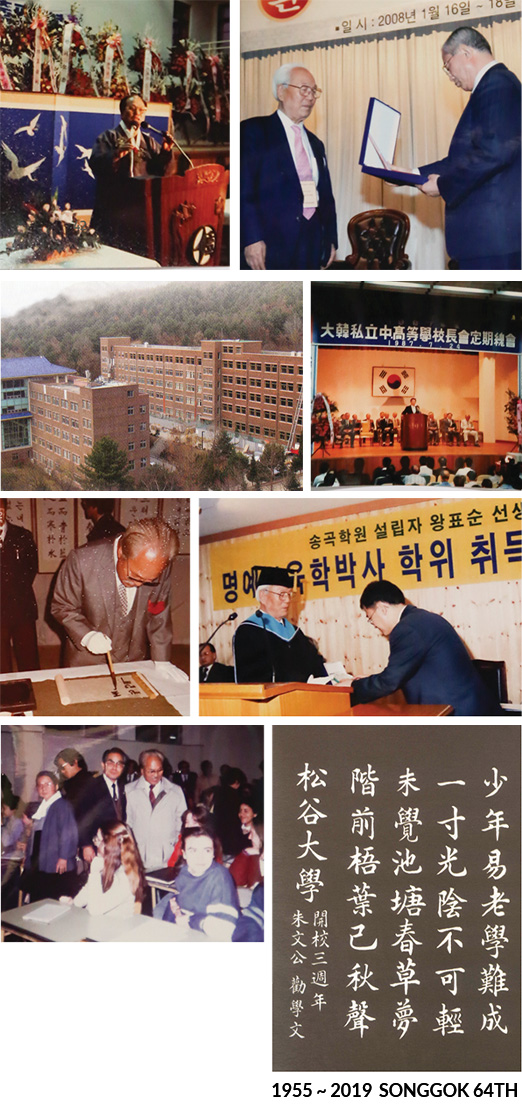
He was introduced to Chinese classics at an early age,
worked as a Chinese character teacher, and through continuous research,
gained a reputation as a ‘master of Chinese classics.’ He was also
skilled in history and published many books related to Chinese classics and history.
His representative works in Chinese studies include:’
Myeongsimbogam (1995),
Myeongsimbogam (1998),
Biji Mencius (2000)
His representative historical works include:
A Study on the Gapsin Coup (1961),
Review of Gapsin Coup (1972),
Collection of World Famous Sayings
In addition, he delved into the study of the Book of Changes,
known as a fundamental Chinese classic and the most difficult philosophy
among the Four Books and Three Classics. He achieved the result of
identifying a human philosophy that linked the Book of Changes with ethics and politics.
Since ancient times, calligraphy has been considered important and is called
calligraphy because it is ‘greatly helpful in the cultivation of the human mind and body.’
The founder was a leader in the spread of calligraphy. He not only promoted
calligraphy among faculty and staff but also included it as part of the curriculum for
students. Furthermore, the "Middle School Calligraphy Book" was published to guide
the general public so they could easily follow the path of calligraphy.
Among the cultural heritage that the world can be proud of,
the best can be said to be traditional sijo. The founder, a sijo poet,
studied sijo and sublimated it into works under the proposition of
inheriting and developing traditional culture.
After making his debut in Korean modern sijo, he was a member of the Korean
Sijo Poets Association and the Korean Writers' Association and served as
vice president of the Modern Sijo Literary Association.
He developed a prolific artistic career, creating over 4,000 Chinese poems and modern sijo.
1986: 1st series, My becomes sunset
1987: 2nd series, Where does the shepherd go
1990: 3rd series, Reading in the thatched hut
1993: 4th series, Becomes a seven-colored sunset
2002: 5th series, Rose of Sharon on this river
2005: 6th series, Let’s live in the Geumgang River
2009: 7th series, Wishing for Unification
2010: 8th series, Let the light of the gospel shine
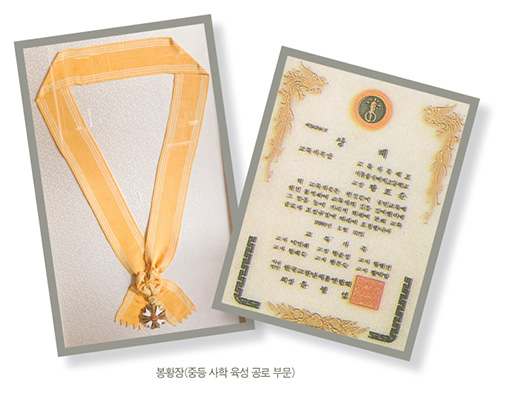
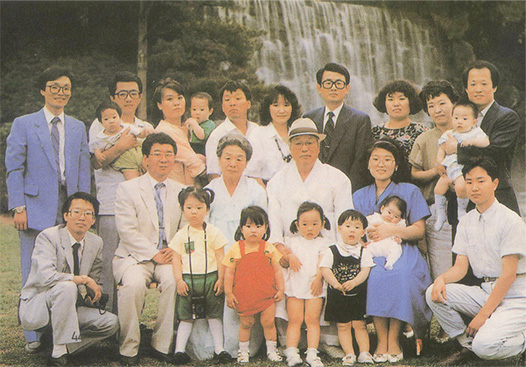
“For the sake of Christ, I am willing to suffer weakness, insults, persecution, and adversity.” This confession of faith, written by the founder in a collection of poems commemorating unification, epitomizes his lifelong journey with God. He praised God in times of happiness and relied entirely on Him during difficult moments. He considered his love for younger students and the establishment of schools as God's mission, dedicating himself to this purpose and living a life of gratitude.
Consequently, all six schools under Songgok Educational Foundation are Christian institutions striving to realize God's will and uphold the spirit of Christianity. The entire family shared the founder's faith in Christ, with all six siblings, led by the eldest son, engaged in education.
In 1990, the Ministry of Education awarded the "Education Family Award" to the family, encouraging them to continue following the founder’s will and pursue the path of becoming educators.


